Don Roberto was a retired business magnate who had lost all passion for living after the d3ath of his wife, Isabella – the woman who had been his entire world.
They never had children. All that remained were a vast mansion and a fortune that attracted the worst intentions from his greedy nephews, who circled him like vultures, waiting for him to weaken.
Convinced that everyone around him cared only about his money, Roberto devised a quiet test—a social experiment meant to reveal the truth about human nature.
He decided to hire a new personal caregiver under strict conditions: the applicant had to come from a distant province, have no known connections, and carry no reputation that could be traced back to him.
That was how Elena entered his life.
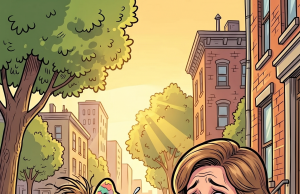
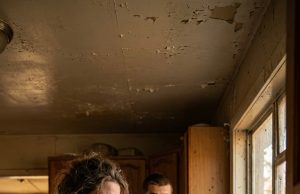
She was young, timid, and visibly poor—raised in hardship, with no trace of ambition in her eyes.
What Elena didn’t know was the most important detail of all.
Don Roberto was not blind.
He only pretended to be.
He wore dark sunglasses even inside the house and walked with a cane, allowing everyone to believe he lived in darkness. In truth, his vision was perfect. He wanted to observe what people did when they thought no one was watching.
During the first week, Elena proved herself diligent and gentle. She worked quietly, spoke respectfully, and never complained. But Roberto noticed something unusual—she often paused in front of the large portrait of Isabella hanging in the living room.
“Sir, your wife is very beautiful,” Elena said softly one afternoon as she fed him.
“Yes,” Roberto replied, staring blankly ahead. “She was my life.”
That was when Roberto decided to set a trap.
One afternoon, he deliberately left the master bedroom door open. On the vanity table, he placed Isabella’s jewelry box—unlocked. Inside rested her favorite piece: a diamond necklace worth twenty million pesos.
Roberto sat in a rocking chair in the corner of the room, sunglasses on, cane beside him, pretending to sleep. Beneath the reflection of the mirror, however, his eyes were wide open.
Elena entered to clean.
She immediately noticed the open jewelry box. The diamond caught the light and shimmered.
Roberto watched every movement, his fingers tightening around a small buzzer hidden in his pocket—one press would summon the police.
Go ahead, he thought bitterly. Show me who you really are.
Elena approached the vanity. Her hands trembled as she lifted the necklace.
Roberto’s chest burned with anger. I knew it. Another thief. Another dreamer who wants to live like a lady.
Elena raised the necklace… and gently placed it around her own neck.
Roberto was seconds away from pressing the buzzer when he noticed something that stopped him cold.
Elena wasn’t smiling.
She wasn’t admiring herself.
She was crying.
She knelt before Isabella’s portrait, clutching the necklace to her chest as though it were a lifeline.
“Ma’am Isabella,” Elena whispered, her voice breaking. “Your necklace is so beautiful. I know I shouldn’t wear it… but I just wanted to feel what it’s like to be important—even for a moment.”
Roberto’s anger froze.
“I hear Sir Roberto crying at night,” Elena continued softly. “He holds this necklace and talks to you. He misses you so much. I wore it only to ask you… please give me the strength to take good care of him.”
She wiped her tears.
“I would never steal this,” she said firmly. “Who am I? Just a servant. But I promise you—I will never abandon your husband. I cared for my father until his last breath. Even if Sir Roberto is blind, I will make sure my heart sees him.”
Elena removed the necklace, polished it carefully with a clean cloth, and placed it back in the box.
“Goodbye, Ma’am,” she whispered. “Please lend me your strength.”
She turned to leave.
“Elena.”
The voice that stopped her was no longer weak or trembling.
She turned around.
Don Roberto was standing.
The cane was gone. The sunglasses were in his hand. And for the first time, his eyes met hers—clear, sharp, and filled with emotion.
“S-sir?” Elena gasped. “Y-you can see?!”
Terrified, she collapsed to her knees. “Please forgive me! I didn’t steal anything! Don’t send me to jail!”
Roberto stepped forward and gently helped her up.
“Stand, Elena,” he said kindly.
He picked up the necklace from the jewelry box.
“I pretended to be blind to see people’s true intentions,” he admitted, tears running down his face. “I believed you would take this for money. I was wrong.”
He placed the necklace around Elena’s neck.
“S-sir, no!” she cried. “That’s far too valuable!”
“There is nothing more valuable than a loyal heart,” Roberto replied. “This belongs to you.”
Elena froze.
“And from today,” Roberto continued, smiling, “you are no longer my caregiver.”
She sobbed. “I’m dismissed?”
“No,” he said warmly. “You are my adopted daughter. Isabella and I always dreamed of a child with a heart like yours—one who knows how to love even when no one is watching.”
Elena embraced him, and for the first time in years, the man who pretended to be blind finally saw light again.
From that day on, Don Roberto was never alone. Elena pursued her studies and became a nurse while caring for the man she now called father. She never sold the necklace—it remained a symbol of trust, kindness, and the moment her life changed forever.