I knew the evening was going downhill long before it truly began.
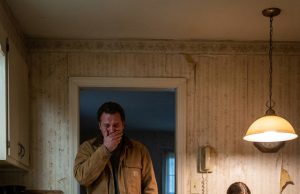
Mark had come home tense, his shoulders stiff, his voice sharper than usual. He wasn’t angry at me, not exactly—just overwhelmed, frustrated, and letting the pressure spill into every corner of the house. But the words he threw out carelessly still stung. Each sigh, each complaint, each raised tone felt like another thread snapping inside me.
Lucas, our five-year-old son, stood behind the sofa, clutching the fabric with tiny trembling hands. He hated when adults argued. Even when no one was yelling or touching anything, the tension alone was enough to frighten him.
When Mark slammed a stack of papers onto the table—not at me, just onto the table—the sound echoed through the room. Lucas flinched and burst into tears. My heart clenched.
I looked at my son and gave him the smallest, barely noticeable nod.
Our secret signal.
The one we had created not for danger, but for moments when the atmosphere became too heavy for a child to bear—when he needed support beyond what I could give in that moment.
Lucas wiped his tears and quietly crawled under the sofa, pulling out the phone I kept hidden there for emergencies. His little voice shook:
“Grandpa… Mom and Dad are fighting again…”
On the other end, there was a long, heavy silence.
Then Thomas—Mark’s father—spoke, voice firm but deeply concerned:
“Stay right there. I’m on my way.”
Mark overheard just enough to understand what had happened. His face drained of color. Not because he was in trouble—but because he knew exactly how disappointed his father would be.
Ten minutes later, a car screeched to a stop outside. The front door opened with a push.
Thomas entered.
Not angry. Not aggressive.
Just… steady. Serious. Silent in a way that made the entire room hold its breath.
He took in everything with one sweeping look:
the scattered papers, my red eyes, Lucas still holding onto me, and Mark frozen, unsure of what to say.
“Mark,” Thomas said quietly, “what happened here?”
“It’s nothing! Just a misunderstanding,” Mark said too quickly.
His voice cracked. It wasn’t convincing.
Thomas turned to me.
“Elena, are you alright?”
I nodded, though the exhaustion must have shown on my face. Lucas pressed closer to my side, hiding behind my arm.
Thomas exhaled slowly.
“In this family,” he said, “we do not create an environment that frightens children—or their mother.”
There was no shouting.
No accusations.
Just truth.
And that truth alone was enough to end the argument.

He placed a gentle hand on my shoulder.
“Take Lucas. You’re staying with me tonight.”
Mark stepped forward as if to object, but he stopped immediately when Thomas looked at him—disappointed, not hostile.
“We will talk tomorrow. Tonight is not the time.”
Three days later, just when things had started to calm down, someone knocked sharply on Thomas’s door.
When I opened it, Rebecca—Mark’s older sister—stood there. Her expression was stiff, her eyes full of questions she didn’t want to ask.
“I need to speak with you,” she said.
We sat in the living room. She took a deep breath.
“Mark says everything was exaggerated. That you and Dad made him look worse than he was.”
A breath caught in my chest.
“Rebecca… do you honestly think a five-year-old would cry like that over an exaggeration?”
Rebecca looked down. The conflict in her face was unmistakable.
“I came to judge for myself,” she whispered. “I grew up with Mark. I know how he can get when he’s overwhelmed.”
Her voice broke slightly.
“I guess… I needed to hear it from you. To face the truth I’ve been avoiding.”
She looked up, eyes shimmering.
“I’ll stand with you. I’ll help however I can.”
For the first time in days, I felt something loosen inside me.
In the following week, Rebecca provided a statement confirming Mark’s long-term issues with emotional control. The family court reviewed the situation and ordered Mark to attend counseling before resuming unsupervised time with Lucas. No one lost custody—just boundaries were set to protect everyone’s peace.
And it worked.
Slowly, our home became calm again.
Now, as I write this, Lucas is asleep in the guest room at Thomas’s house, breathing softly and peacefully. Thomas is in the kitchen reading, keeping an eye on us like a quiet guardian.
And I realize something important:
Drama doesn’t have to be physical to hurt.
Sometimes it’s the silence, the tension, the unseen storm in someone’s voice.
And sometimes… being rescued simply means someone shows up. Someone listens.
Someone says, “You’re not alone.”