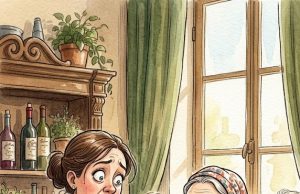
“Get out!” my father shouted, jabbing a finger toward the door while dinner was still untouched. My mother smiled calmly. My sister wouldn’t even meet my eyes. I walked away with nothing but my coat and my dignity. What they didn’t realize was that his outburst wasn’t the finale—it was the catalyst. Somewhere, a sealed file had just been set in motion. And within 24 hours, I wouldn’t return to plead. I’d return with everything they believed I could never possess.
Part 1: “Get Out”
My father didn’t soften his tone or pause for a second. He shot up so abruptly his chair screeched across the floor, thrust his arm toward the front door, and yelled, “Get out.”
The room fell unnervingly quiet, broken only by the low buzz of the chandelier overhead. The dinner plates were still warm, steam curling up from food no one had touched. My mother leaned back in her chair, composed, her mouth set in a faint, knowing smile. My sister watched with barely concealed satisfaction, as if she’d been waiting for this scene to unfold.
“What did I do?” I asked, though I already knew the answer wouldn’t change anything.
“You’re ungrateful,” my father shot back. “You add nothing. You live off our reputation and make us look foolish.”
It wasn’t true. I had a job. I paid my own way. I stayed quiet to keep the peace. But in this house, silence was treated as an admission of guilt.
“Go,” he said again. “And don’t come crawling back for help.”
No one intervened. No one defended me.
I grabbed my coat and my phone and walked out without another word. The door slammed shut behind me, locking the moment into permanence. I stood on the porch for a brief second, drawing in the cold night air, stunned by how a single family dinner could erase thirty years so completely.
What they didn’t know—what none of them noticed—was the clause.
Years earlier, my grandfather, Thomas Whitaker, had quietly revised his estate plan. Once, over coffee, he’d told me, “People reveal who they really are when they think nothing will happen afterward.” At the time, I hadn’t understood.
As I drove away that night, my phone vibrated.
A message from a law firm I didn’t recognize.
Please confirm your availability tomorrow. A contingency has been activated.
That was when it became clear: my father’s curse wasn’t the conclusion.
It was the key.
Part 2: The Will No One Knew Existed
The following morning, I found myself seated across from two lawyers in a glass-enclosed office with a sweeping view of the city. They spoke in measured, professional tones, as though outlining a plan that had been quietly in place for years.
My grandfather had drafted a second will—sealed, conditional, and precise. It wasn’t solely about wealth; it was about conduct.
“If a direct heir officially cut ties with you,” one of the attorneys said, “you would become the primary beneficiary.”
I let out a short, incredulous laugh. Not from happiness, but from shock. “So being kicked out…”
“Triggered the will,” he concluded.
The inheritance included a $20 million estate, additional assets, and control over several trusts—everything my father had long assumed would eventually be his.
“What about my parents?” I asked.
“They relinquished their rights through documented actions,” the lawyer replied. “Your father’s statement was on record.”
Of course it was. My grandfather never relied on fading memories—only evidence.
By that afternoon, my family had found out.
My phone lit up nonstop with calls, missed calls, and voicemails ricocheting between fury and fear.
“You set us up,” my sister shouted in one message.
My mother sobbed in another. “We never meant it that way.”
My father didn’t call at all. He sent a single text.
This isn’t finished.
But it was.
The property transfer was completed within a day. The keys were placed in my hand by someone who showed me more respect than my own family ever had.
That night, I stood alone in the mansion’s grand entrance, the sound of my footsteps echoing softly, a reminder that true power doesn’t arrive loudly.
It waits.
Part 3: When Silence Finally Spoke Back
The weeks that came after were pure turmoil—for them, not for me.
My parents rushed to hire attorneys. My sister flooded social media with cryptic accusations. Family friends reached out, probing for explanations I had no intention of offering.
I didn’t rush to defend myself in public. There was no need.
The paperwork was unmistakable. Every condition had been satisfied. The transfer couldn’t be undone.
What shocked me most wasn’t the sudden wealth—it was the absence of fear.
For the first time, I answered the phone without tension. I spoke without cushioning my words to prevent arguments. I stopped apologizing simply for taking up space.
Eventually, my father asked to meet.
“You humiliated me,” he said bluntly from across the table.
“You disowned me,” I answered.
He had nothing to say after that.
I walked away from the meeting without anger, without triumph—only understanding.
Some relationships don’t shatter in an instant. They crack slowly, until one moment finally exposes the damage.
Part 4: What the Door Truly Opened
I still revisit that dinner in my mind—the accusing finger, the shouted command, the heavy silence that followed.
But now I see what I couldn’t then.
Being told to leave didn’t leave me without a home.
It gave me freedom.
The mansion wasn’t what transformed my life. Realizing I no longer needed permission to exist was.
If you’ve ever been cast aside, pushed out, or made to feel insignificant, remember this: people don’t always understand the force of the words they hurl.
Sometimes what they call an ending is the beginning you were never allowed to claim.